 Vancouver Trip Guide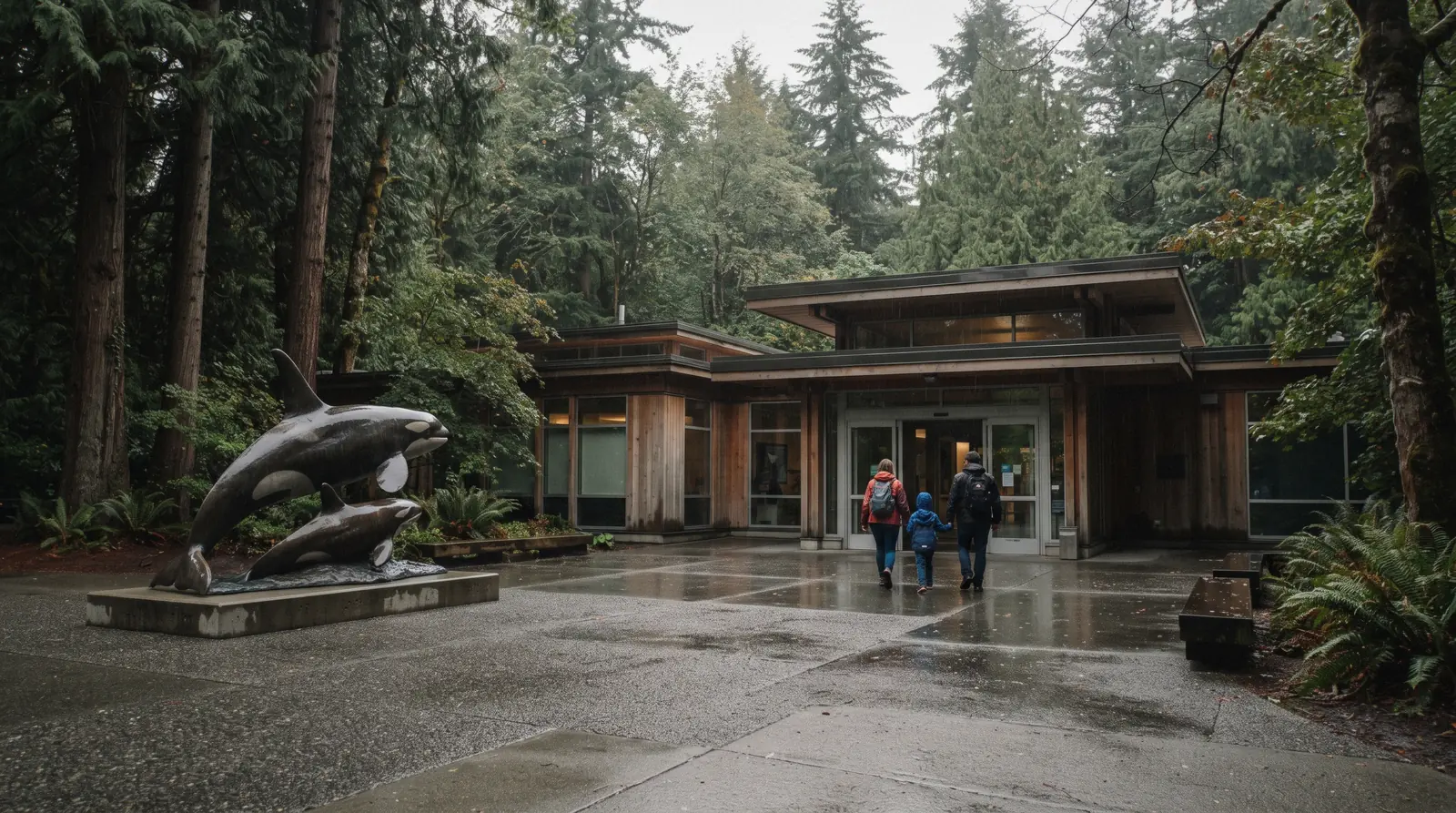
Vancouver Aquarium
The Vancouver Aquarium is Canada's largest aquarium and it stands inside Stanley Park, at 845 Avison Way, about a fifteen minute walk from the West End. The park around it is free at every hour; the aquarium is the one gated, ticketed thing inside it, and its adult price moves from day to day rather than sitting at a single figure. This page covers the hours, the last entry, the galleries, how long to allow and how to get there without a car. The money, the membership arithmetic and the reseller comparison sit on the Vancouver Aquarium tickets page; the park itself is on the Stanley Park guide, and the rest of the city starts on what to do in Vancouver.
Quick answer Hours, last entry, what it costs, how long to allow
The Vancouver Aquarium opens 10am to 5pm daily in September with the last entry at 3:30pm, and entry is a timed ticket you choose a date and hour for. The adult price is dynamic: the aquarium publishes a band of $30.40 to $42.00 (CA$41.95 to CA$57.95) and shows you one figure only after you pick a date.
Key takeaways
- It stands inside Stanley Park, which charges nothing at any entrance; the aquarium is the ticketed exception, and the City, not the aquarium, runs the pay parking on the lot outside it
- Most guests spend 90 minutes to two hours, the aquarium's own figure. The skip-the-line ticket is a flat price on any date with free cancellation up to 24 hours before, while the aquarium's own price can land under it or over it
- It is the largest indoor attraction inside the park, which is why it anchors the rainy day list; with children it pairs with the Vancouver with kids plan and with Science World across False Creek
Key facts
Opening hours
| Daily, September | 10:00 am–5:00 pm |
|---|---|
| Last entry | 3:30 pm |
| Gift Shop | 10:30 am–6:00 pm |
| Courtyard Cafe | 10:00 am–4:00 pm |
Closed No regular closed day is published. The official calendar shows Hours TBD for October onward, which is a gap in the aquarium's own publishing rather than a closure.
Admission
- Adult
- $30.40 to $42.00 (CA$41.95 to CA$57.95), set by the date you choose, tax included in the figure shown
- Reduced
- Child 3 to 12, Student 19 and over and Senior 65 and over tickets exist; no figure is published until a date is selected
- Free
- Toddlers under 3, who do not need a ticket at all
Planning it
- Time needed
- The aquarium's own figure: most guests spend 90 minutes to two hours. The reseller card recommends two to four hours for every gallery.
- Book ahead
- Recommended — a few days
- Address
- 845 Avison Way, Vancouver, BC V6G 3E2, inside Stanley Park
The Ways In, Priced Side By Side
The aquarium's own dynamic band beside the annual membership and the two cards sold on GetYourGuide. Official figures read from vanaqua.org and its ticket shop in Q3 2026; card prices are the platform's own listings on the same day. Canadian dollars are what you hand over at the till.
Is the aquarium's own price lower on your date, or is a fixed price you can cancel worth more than the gamble?
| Option | Price | What it includes | Cancel | Book |
|---|---|---|---|---|
| Official timed ticket, vanaqua.orgAnyone with flexible dates who can compare two or three days and take the cheap end of the band | $30.40 to $42.00 (CA$41.95 to CA$57.95) for ages 13 to 64; child, student and senior tiers exist but no figure shows until a date is picked | One dated entry time, every gallery, the 4D theatre and the daily talks and feedings; the displayed price includes tax | None. All ticket purchases are final and non-refundable | Official site |
| Silver annual membership, adultAnyone who will walk in twice, which by the aquarium's own arithmetic is where a membership overtakes single tickets | $58.00 (CA$80) for one named person for a year | Unlimited entry with no booking at all, member newsletter and member events; child, student and senior tiers exist | Final and non-refundable | Official site |
| Skip-the-line ticket on GetYourGuidePeak-date visitors and anyone who wants a booking they can cancel; it undercuts the aquarium only on the expensive dates | $37.73 on any date | The same admission plus the 4D theatre and the Wet Lab; parking, the VR experience and animal encounters are excluded on the card itself | Free up to 24 hours before, and you can reserve now and pay later | Check Availability |
| Dark Secrets of Stanley Park walk, meeting at the aquarium doorAdults with two hours to fill before or after a timed slot; it buys the park's history, not the galleries | $28.29 | Two hours off the main paths on the forced evictions, Deadman's Island and the park's cemeteries; no aquarium admission of any kind | Free up to 24 hours before | Check Availability |
The comparison is narrower than it looks. The aquarium sells one product at a price that moves, the reseller sells the same product at a price that does not, and the reseller's flat $37.73 sits inside the official band rather than under it: on a quiet date the aquarium is cheaper, on a busy one the card is. What the card adds that money cannot buy back is the cancellation, because every ticket bought from the aquarium is final. The membership row is not a discount, it is a break-even bet on coming back.
Entry And The Guided Ways Around It
The first card is admission; the rest are ways to spend the park around your slot. Each links to the operator's own page, where the calendar shows what is still open on your date. Prices are the platform's US-dollar listings, read in Q3 2026.
 from $37.73
Vancouver Aquarium: Skip-the-Line Ticket
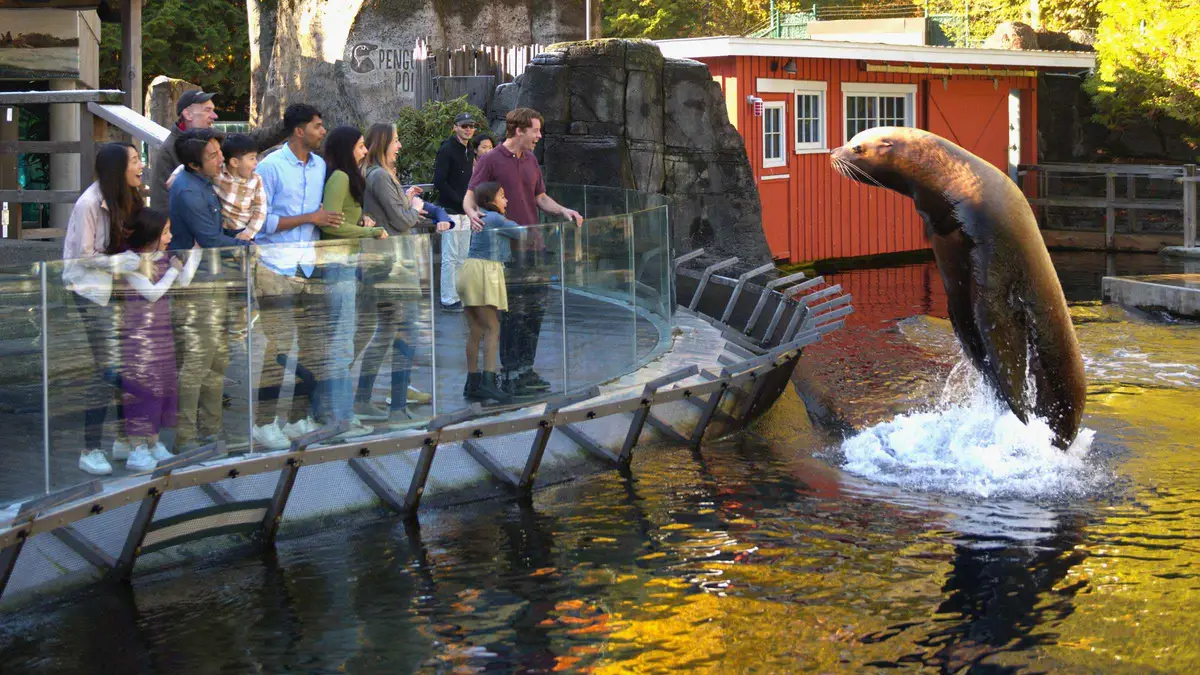
Skip-the-ticket-line entry to the aquarium in Stanley Park, with the 4D theatre and Wet Lab included and animal encounters charged separately. Two to four hours covers the galleries, and the site is cashless.
Check Availability from $28.29
Vancouver: The Dark Secrets of Stanley Park Tour
Two hours off the main paths with a storyteller, covering the forced evictions of Coast Salish families, the smallpox history of Deadman's Island and the park's hidden cemeteries. Adult subject matter, ending back at the aquarium.
Check Availability from $58.04
Vancouver: Stanley Park Talking Trees Tour
Ninety minutes and 2.2 km around Beaver Lake with an Indigenous guide explaining how Coast Salish people use the park's trees and plants for food and medicine. Herbal tea is included, and berries in season.
Check Availability from $64.57
Top rated
from $64.57
Top rated
The Ultimate Stanley Park E-Bike Tour
A five-rider e-bike tour that rides the whole seawall loop plus the interior trails, stopping at the totem poles, Deadman's Island, Siwash Rock and Prospect Point. Pickup anywhere in Vancouver proper is included in the price.
Check Availability from $75.70
Top rated
from $75.70
Top rated
Vancouver: Stanley Park Bicycle Tour
Three hours and 12 flat kilometres through the West End, English Bay and Stanley Park with a guide who stops for the totem poles, Beaver Lake and the forest trails. Bike and helmet are included; e-bike upgrades are in-store only.
Check AvailabilityPrices, ratings and details are the platform's own. Dollar figures are the listed prices. The platform bills in your account's currency.
What The Vancouver Aquarium Is, And Who Runs It Now
Canada's first public aquarium, its largest, and since 2021 a commercial operation rather than a charity's. That last change is the one visitors notice least and it explains most of what the ticket page looks like today.
The aquarium opened on 15 June 1956 on a plot inside Stanley Park granted by the City, built with $100,000 from each of the three levels of government and the backing of the timber magnate H.R. MacMillan. It was Canada's first public aquarium and it has stayed the country's largest. The building now covers roughly 9,000 square metres with about 9.5 million litres of water in 166 displays, and its own marketing settles on one round figure for the animals in them: 65,000.
Ownership changed hands in the pandemic. Ticket sales collapsed, the not-for-profit that ran it paused public programming, and on 15 April 2021 Ocean Wise signed the aquarium over to Herschend, an American family entertainment company, with a commitment to donate one per cent of gross profits to Ocean Wise's conservation work. The aquarium reopened that August. The conservation brand and the aquarium are now separate organisations, which is worth knowing if you came because you remembered the Ocean Wise seafood programme: that stayed with Ocean Wise.
The Marine Mammal Rescue Centre is not on the visit
The rescue hospital that features in most of the aquarium's storytelling is a separate site and it is not part of a general admission ticket. It admits about 100 distressed marine mammals in an average year, mostly harbour seals, and several of the animals you see in the galleries are its patients that Fisheries and Oceans Canada declared non-releasable. What you can see on the visit is the Marine Rescue exhibit inside the building, where those ambassador animals live.
The Vancouver Aquarium In Ten Dates
The aquarium's own history explains the question visitors still ask at the door, which is whether the whales are still here. They are not, and the sequence below is how that happened.
-
1950
The Vancouver Public Aquarium Association forms
Three UBC fisheries and oceanography professors, Murray Newman, Carl Lietze and Wilbert Clemens, set up the association, then raise $100,000 from each of the City, the Province and the federal government.
-
15 June 1956
Canada's first public aquarium opens
The ribbon is cut by the federal fisheries minister James Sinclair. His seven year old daughter Margaret is at the ceremony; she later marries Pierre Trudeau.
-
18 July 1964
Moby Doll, and the start of the cetacean era
The aquarium becomes the second in the world to capture and display an orca. For decades afterwards the orca show is the reason most visitors come.
-
1975
First aquarium accredited by the AZA
The Association of Zoos and Aquariums accredits it before any other aquarium; it is also accredited by the Canadian association.
-
1987
Named Canada's Pacific National Aquarium
A federal designation, and the last piece of the institutional standing it still trades on.
-
1996
The Park Board bans wild capture
A municipal bylaw stops the aquarium taking cetaceans from the wild for display. From here on it may only hold animals born in captivity, taken before 1996, or rescued and judged unreleasable.
-
2001
The last orca leaves
Bjossa, alone after Finna's death, is moved to SeaWorld San Diego in April. No orca has been held in Vancouver since.
-
24 November 2017
Chester dies and one dolphin is left
The rescued false killer whale dies of a bacterial infection, leaving Helen, a Pacific white-sided dolphin, as the only cetacean in the building.
-
June 2019
Parliament ends cetacean captivity
The Ending the Captivity of Whales and Dolphins Act passes with a grandfather clause. Marineland has 61 cetaceans at the time; Vancouver has one.
-
April 2021
Helen leaves, and so does the charity
Helen is transferred to SeaWorld San Antonio, where she dies the following year. In the same month Ocean Wise signs the aquarium over to Herschend; it reopens on 16 August 2021 with no whales or dolphins on display.
Dates from the Vancouver Aquarium record on Wikipedia, cross-read against the aquarium's own pages at vanaqua.org in Q3 2026. One caution about a date you will see elsewhere: a 2017 Park Board bylaw amendment is widely cited as the moment cetacean display ended in Vancouver, and we could not confirm its text in any source read for this page, so the sequence above follows the 1996 bylaw, the 2019 federal Act and the aquarium's own record instead.
What To See, Gallery By Gallery
The building runs indoors and out over one broad loop, and the outdoor habitats are the ones people remember. Nothing here needs a queue of its own; the shows and feedings do run to a timetable, and that timetable is posted on screens at the entrance rather than online in advance.
Steller's Bay and the outdoor mammals
The habitat that used to hold the belugas is now Steller's Bay, an active sea lion research station run with the University of British Columbia. Eleven Steller sea lions live there, several of them owned by the university and part of a long study into the collapse of the Alaskan population. There are also six northern fur seals, four harbour seals and one California sea lion found shot and blinded at Spanish Banks.
This is the part of the visit that runs on a schedule: the feedings and training sessions are the thing to be standing at, and if you turn up at 10am with a small child, walk here first and see the galleries afterwards.
The sea otters, which are the reason half the visitors come
The otters are rescues, mostly from the north end of Vancouver Island. A video of two of the aquarium's otters holding hands, filmed here in 2007, has been watched more than 19 million times and did more for the building's reputation than any campaign; the aquarium set up a live otter cam because of it. Neither of the otters in that video is still alive, and the current visitor pages we read do not link a live cam, so do not plan on watching one from your hotel the night before.
The Amazon gallery, the Pacific Canada tank and the cold water
The open-air Amazon Gallery is a warm rainforest room with sloths and free-flying birds, and it is heated using waste heat from the cafe kitchens, which the aquarium documents on its own sustainability page. The Pacific Canada Pavilion is the 260,000 litre tank at the entrance, holding the fish and invertebrates of the Strait of Georgia. Beyond it a series of British Columbia habitats run cold and dim: a giant Pacific octopus, rockfish, sea stars and anemones.
Jellyfish and axolotls draw the longest phone queues of anything in the building, on the evidence of the reviews on the entry card.
The 4D theatre, the Wet Lab and Clownfish Cove
The 4D theatre and the Wet Lab are inside general admission, including on the reseller card. The theatre runs short films with seat effects; the Wet Lab is a touch tank with staff on hand, and it is where children spend longer than their parents planned. Clownfish Cove is an indoor play area for under-8s.
The paid extras are the VR experience, the behind-the-scenes tours and the animal encounters, none of which are in any admission ticket, and the aquarium sells them separately.
How Much Time To Give The Vancouver Aquarium
The aquarium says most guests spend 90 minutes to two hours. The card that resells its ticket says allow two to four hours. Both are true, because the variable is not the galleries, it is whether you wait for the animal sessions. These three routings are ours, built from the published hours, the aquarium's own time figure and the last entry rule.
The one hard constraint is the last entry, 90 minutes before closing. On September hours that is 3:30pm for a 5pm close, and there is no limit on how long you stay once you are through the turnstile. So the short visit is a real option in the late afternoon in a way it is not at a museum with a hard sweep.
| Routing | What you get | What it skips | Door to door |
|---|---|---|---|
| The quick loop | Every gallery once, the Pacific Canada tank, the Amazon room, the otters and the outdoor mammal habitats | The 4D theatre, the Wet Lab and any timed talk or feeding you did not happen to walk into | 90 minutes, which is the low end of the aquarium's own figure |
| The full visit | The galleries at a walk, the 4D theatre, the Wet Lab, and two or three of the posted talks and feedings | Nothing inside the ticket; the paid encounters and the VR are extra whatever you do | Two to four hours, the range the reseller card recommends |
| Aquarium plus park | A morning slot, then the seawall, the totem poles at Brockton Point and lunch, or the two hour storytelling walk that meets at the aquarium door | A second indoor attraction; this fills the day inside Stanley Park alone | Half a day from the West End and back |
Hours, Last Entry And The Gap In The Calendar
September hours are 10am to 5pm daily, and the last time you may enter is 3:30pm, because the rule is that the last entry falls 90 minutes before closing. Nothing on the aquarium's pages names a weekly closing day, and Vancouver's museums generally do not take the European Monday off, which the museums and galleries hub sets out for the rest of the city.
The honest finding on hours is a gap rather than a fact. From October onward the aquarium's own calendar shows Hours TBD, with no times published at all when we read it. If your trip falls in the autumn, treat the September pattern as a guide and check the calendar before you build a morning around it. Nobody else publishes those hours either, and the guides that print 10am to 5pm year-round are repeating a season, not a schedule.
The food outlets keep their own hours, which matters if you were planning to eat here rather than in the park: the Coffee Bar opens earliest at 9am and shuts at 4:30pm, the Courtyard Cafe runs 10am to 4pm, and the Gift Shop stays open latest, to 6pm.
- Last entry 3:30pm on September hours, and no limit on how long you stay after that
- No weekly closed day is published; October hours onward are shown as TBD by the aquarium itself
- Members do not book at all: the member reservation system is described as currently unavailable, so proof of membership at Admissions is the whole process
- Talks and feedings are posted on screens at the entrance on the day, not on the website in advance
Inside: Cashless, Strollers, Water And Accessibility
The aquarium went fully cashless in May 2026. Debit, credit and phone payments are taken everywhere in the building and cash is not, at admissions, in the cafes and in the shop. Two Cash-to-Card kiosks in the Gift Shop and the Courtyard Cafe convert notes onto a prepaid card free of charge, from CA$5 to CA$500, and the balance cannot be turned back into cash afterwards; a card left unused for 92 consecutive days starts charging CA$3.95 a month. Take the change home and spend it somewhere.
Strollers are where families get caught. Wagons, jogging strollers, push-cars and ride-on scooters are not allowed inside the building; mobility scooters are. The Accessibility Centre lends wheelchairs, walkers, canes and noise-cancelling headphones free at Guest Services, and sensory comfort kits are available there too. Accessible washrooms sized for motorised and oversized wheelchairs are in the Frogs Forever and Tech Engagement galleries, and the aquarium won a provincial tourism award for accessible experience in 2024. Service animals are admitted; other pets are not.
One small thing that saves money: the only water sold here is Vancouver's tap water, in dispensers around the building, and no single-use plastic bottles are sold at all. Bring a bottle. The city's water is unusually good and the tap water page has the testing figures behind that claim.
- Cashless since May 2026; free Cash-to-Card kiosks in the Gift Shop and Courtyard Cafe
- No wagons, jogging strollers, double strollers, push-cars or ride-on scooters inside; mobility scooters are fine
- Free wheelchair, walker, cane and noise-cancelling headphone loans at Guest Services
- Refill dispensers throughout, no bottled water on sale, lockers available for rent
Five Things Most Visitors Do Not Know About The Vancouver Aquarium
Each of these changes something practical about the visit, and each carries the source it came from.
- The price you are quoted depends on the day you pick, not on when you book. The aquarium runs day-to-day dynamic pricing and publishes only the band, $30.40 to $42.00 (CA$41.95 to CA$57.95); its own wording is that prices "may vary from day-to-day" and that booking ahead guarantees the lowest price at the time of booking, which is not the same as a discount [vanaqua.org ticket shop, read in Q3 2026]. - Every ticket the aquarium sells is final. "All ticket purchases are final and non-refundable" is the published condition, which is why the reseller card's free cancellation is the one thing money cannot buy on the official shop [vanaqua.org tickets page]. - The parking outside is the City's, and a membership does not touch it. The aquarium states plainly that it cannot offer free parking, because every pay lot in Stanley Park belongs to the City of Vancouver; that is the park's own rate card, not an aquarium charge [vanaqua.org membership FAQ]. - There are no whales or dolphins, and there have not been since 2021. Helen, the last Pacific white-sided dolphin, went to SeaWorld San Antonio in April 2021; the orcas ended in 2001 [Wikipedia, Vancouver Aquarium; the aquarium's current galleries list no cetaceans]. - Toddlers under three do not need a ticket at all, not a free one, not a booking, which is worth knowing before you sit down to buy for a family [vanaqua.org tickets page]. Once tickets and parking are settled, the aquarium also pairs well with the best tours in Vancouver, a natural next step for turning a Stanley Park visit into a fuller day out.
Getting There: The Bus Everyone Misses, And The Parking Nobody Warns About
The address is 845 Avison Way, in the middle of Stanley Park, and the walk in from the West End takes about twenty minutes on flat ground. There is no shuttle. The City states outright that there is no public transit service around the park, so the trolley marketed to tourists as a park shuttle is a paid private tour, not a service.
What does reach it is the number 19 bus, which runs from downtown to Stanley Park Loop, a few minutes' walk from the aquarium entrance. That is a one-zone fare at any hour, CA$2.85 with stored value on a Compass Card or CA$3.50 tapping a contactless card, and children 12 and under travel free. Buses are one-zone at all times, so nothing about the trip is complicated. The getting around page has the fare table and the Compass Card deposit arithmetic.
If you drive, the parking is the City's, pay-by-plate, and enforced 6am to 11pm seven days a week all year, which catches people who assume an evening in the park is free. Rates run seasonally, CA$4.75 an hour with a CA$17.75 day maximum from 1 April to 30 September and CA$4.25 with a CA$12.75 maximum through the winter, tax included. Accessible parking for the aquarium sits in the City lot on the north side of the building.
- Bus 19 to Stanley Park Loop, then a short walk; one-zone fare at every hour
- About 20 minutes on foot from Denman Street in the West End
- City pay parking, pay-by-plate, enforced 6am to 11pm every day of the year
- No City shuttle exists inside the park; the trolley is a private paid tour
At The Vancouver Aquarium: What To Do, And What Not To
Every line here is a decision argued somewhere above, compressed into what you act on that morning.
Do
- Compare two or three dates in the official shop before you buy, because the price moves by date and the band is more than ten dollars wide
- Take the flat-price card instead if your plans could change, since it is the only version of this ticket you can cancel
- Walk to the outdoor mammal habitats first and pick up the day's talk times from the entrance screens
- Bring a bottle: the only water sold here is the tap water, in dispensers around the building
- Leave the wagon or the jogging stroller in the car or at the hotel, because neither is allowed inside
Don't
- Don't arrive after 3:30pm on September hours expecting to get in; the last entry is 90 minutes before closing
- Don't count on October hours from a guidebook: the aquarium's own calendar shows them as TBD
- Don't bring cash and expect to spend it, and don't load more onto a Cash-to-Card kiosk than you will use
- Don't buy a membership as a discount for one visit; it overtakes single tickets at the second one, as the tickets page works out
- Don't come expecting whales or dolphins: the last cetacean left in 2021
Vancouver Aquarium Map: The Door, The Park And What Is Next To It
The aquarium entrance inside Stanley Park, with the seawall, the park's own centre and the two downtown attractions closest to it.
Next Stop From The Aquarium
Walk times are our estimates from the published addresses; everything here is inside the park or on its edge.
Stanley Park
The aquarium stands inside it, and the park itself charges nothing at any hour: the totem poles at Brockton Point are eight minutes away on foot, and the pay parking is the City's.
At the doorStanley Park Seawall
The 9 km loop takes two to three hours to walk or an hour to cycle, on the City's own figures. The seawall guide has the split walking and cycling lanes and the 15 km/h limit.
8 min walkEnglish Bay
Follow the seawall south out of the park for the sunset beach and the West End cafes. English Bay is free, and it is the obvious place to end an aquarium morning.
25 min walkVancouver Aquarium Questions
Is the Vancouver Aquarium worth going to?
If you have a rainy half day or children under about twelve, yes: it is the largest aquarium in Canada, the outdoor sea lion and otter habitats are the strongest part and the 4D theatre and Wet Lab are inside the ticket. If you came for whales, no, because there have been none since 2021. The price is the sticking point rather than the content, which is why the tickets page sets the official band against the flat-price card.
Does the Vancouver Aquarium still have killer whales?
No, and it has not since April 2001, when Bjossa was moved to SeaWorld San Diego. Belugas and dolphins followed: Helen, the last cetacean of any kind, left in April 2021. To see orcas in British Columbia you need the water rather than a building, which is what the whale watching page is about.
What are the Vancouver Aquarium's hours and when is the last entry?
September hours are 10am to 5pm daily and the last entry is 3:30pm, because entry closes 90 minutes before the doors do. No weekly closed day is published. From October the aquarium's own calendar shows Hours TBD, so check it before you build a plan around a slot; the best time to visit page covers what else shifts by season.
Is the Vancouver Aquarium in Stanley Park, and does the park charge to get in?
It stands at 845 Avison Way, in the middle of the park, and Stanley Park is free from every entrance at every hour. The aquarium is the ticketed exception inside it. What costs money in the park besides the aquarium is the parking, which the City runs and enforces from 6am to 11pm all year, and the horse-drawn carriage. A guided option that starts at the aquarium door is the Dark Secrets walk.
Is the Vancouver Aquarium a good rainy day visit with children?
Yes, and it is the one most families default to: it is indoors, the Wet Lab and the 4D theatre are inside the ticket and Clownfish Cove is built for under-8s. The alternative on the other side of downtown is Science World, which suits 6 to 14 year olds and prints a flat published price instead of a moving one. Both are ranked with the other indoor options on the rainy day list, and if you are doing both, give each its own half day.
Why is the Vancouver Aquarium famous?
Three reasons, and only one of them is current. It was Canada's first public aquarium when it opened in 1956 and is still the largest. It was, for decades, the country's best known cetacean facility, which ended with the animals leaving. And a 2007 video of two of its sea otters holding hands passed 19 million views and turned the building into a reference point for otters, which is still why most visitors walk straight to that habitat. The things to do list places it against the rest of the city's attractions.
How long do you need at the Vancouver Aquarium?
The aquarium's own figure is 90 minutes to two hours, and the reseller card recommends two to four hours to cover everything. Our routings are in the section above: 90 minutes for one pass through the galleries, two to four hours if you want the theatre, the Wet Lab and a couple of the posted feedings, half a day if you attach the park to it.
Do you have to book the Vancouver Aquarium in advance?
Entry is timed and the aquarium recommends booking, because daily capacity is limited and it will not guarantee entry to anyone buying at the door on a sold-out day. Members are the exception and walk in without booking. If you want a booking you can undo, only the card with free cancellation offers it, since every ticket sold by the aquarium is final.
Where The Aquarium Fits In A Vancouver Day
Take a morning slot, give it two hours, and walk out into the park rather than back to the hotel: the totem poles, the seawall and Third Beach are all within half an hour on foot, and the day costs nothing more. That is the shape the one day itinerary uses when the weather is poor and the shape the Vancouver with kids plan uses whatever the weather.
If it is raining hard enough to write the day off outdoors, the aquarium plus Flyover in Vancouver at Canada Place plus the Lookout is three indoor hours with two short bus rides between them; the rainy day page sequences them. And if the sun is out, do the reverse: the park first, the aquarium in the late afternoon on a slot before 3:30pm, when the school groups have gone. Every ticketed attraction in the city, with its official price beside the reseller one, is compared on the Vancouver attraction tickets hub.
The Vancouver Aquarium On Film: Galleries, Animals And Crowds
Three walk-throughs filmed inside the building. Watch one and you will know whether 90 minutes or three hours is your visit, which is the only decision this page cannot make for you.
Vancouver Aquarium - Walking Tour - Full Walkthrough 4k - 2025
A full walk through every gallery in order, the closest thing to standing in the building before you buy.
Video: Con Quests - Relaxing Convention and Museum ToursVancouver Aquarium 2024: A Perfect Family Day Out!
The visit filmed as a family does it, useful for judging how long children actually last here.
Video: Earth SeenInside Canada's Largest Aquarium: Vancouver Aquarium (Not A Typical Tourist Attraction)
A closer look at the animals and the rescue work behind them, including the outdoor mammal habitats.
Video: Nat and MaxVideos load from YouTube only when you press play.
Prices, hours and terms are set by the venue or operator and confirmed at checkout.
We may earn a commission if you book through one of our links, at no extra cost to you. Full affiliate disclosure