 Vancouver Trip Guide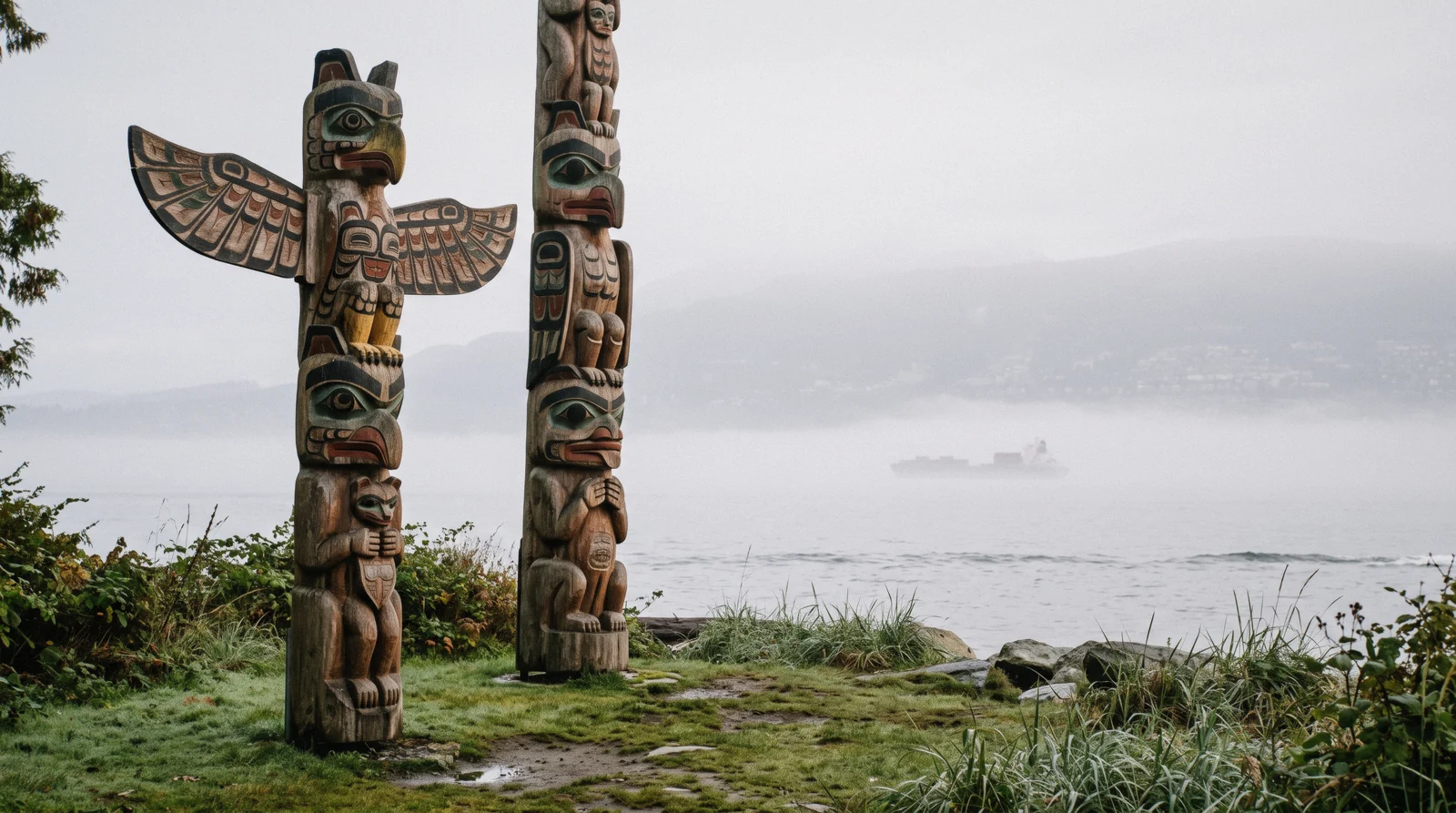
Stanley Park
Stanley Park is the 400 hectare peninsula at the north end of downtown Vancouver, open 6am to 10pm, free to walk into from any direction and circled by a 9 km seawall that the City says takes 2 to 3 hours on foot or an hour by bike. Nothing is charged at a gate, because there is no gate; what does cost money is parking, the aquarium inside the park and the horse drawn carriage. This page covers the loop, the landmarks, the totem poles at Brockton Point and the map, and it links the wider seawall route and the beach at English Bay where most walkers finish.
Quick answer Free or paid, how long the loop takes, how to get in, in three lines
Stanley Park is free. There is no gate, no ticket and no booking, and the City charges only for parking, which runs 6am to 11pm every day of the year on every roadway and lot in the park. The 9 km seawall portion takes 2 to 3 hours to walk or about an hour to cycle.
Key takeaways
- Three things inside the park do cost money: parking, the aquarium (its prices sit on the aquarium page) and the horse drawn carriage ride from 735 Stanley Park Drive
- The fastest full circuit is on two wheels: the small group e-bike tour rides the whole seawall with stops at the totem poles and Siwash Rock, and the three hour bicycle tour covers the same ground at a slower pace
- Getting here is the part people underestimate. The park train is out of service and the City states there is no public transit service around the park, so it is a walk from the West End, a bike, the number 19 bus to the edge, or a paid parking stall (how the transit system works)
- Walk the seawall clockwise from English Bay and you finish at Coal Harbour with the city in front of you; the full 28 km route continues in both directions
Key facts
Opening hours
| Park, daily | 06:00–22:00 |
|---|---|
| Pay parking enforced, daily | 06:00–23:00 |
Closed The park itself: not stated. The seawall between Prospect Point and Third Beach closes for about three weeks each winter, and for a few days at Ferguson Point, for rock scaling; the 2026 to 2027 dates are not published.
Admission
- Adult
- Free. No admission is charged for the park, the seawall or the totem poles at Brockton Point
- Reduced
- Pay parking applies year round on all roadways and lots: CA$4.75 an hour and CA$17.75 a day from April 1 to September 30, CA$4.25 and CA$12.75 from October 1 to March 31, taxes included
- Free
- Walking, cycling, the beaches, Lost Lagoon, Beaver Lake and the totem poles cost nothing at any hour
Planning it
- Time needed
- The City states 2 to 3 hours to walk the 9 km seawall portion, or 1 hour to cycle it
- Book ahead
- Optional — walk-up usually fine
- Address
- Stanley Park, Vancouver, BC. Main entrance at the west end of West Georgia Street; second entrance from Beach Avenue at English Bay
What entry to Stanley Park actually costs, read on vancouver.ca and on the operators' own listings on GetYourGuide in Q3 2026. The first row is the park itself, which charges nothing; every row below it buys a guide, a bike or a story, not access.
The park costs nothing, so the only question is whether you want a guide, and on what.
| Option | Price | Length | Cancel | Book |
|---|---|---|---|---|
| Walk or cycle in yourselfAlmost everyone. The park has no admission and no timed entry, so a ticket buys guiding, never entry | Free, 6am to 10pm | 2 to 3 hours on foot, 1 hour by bike | Nothing to cancel | Official site |
| Small group e-bike tour, pickup includedAnyone who wants the entire seawall plus the inner trails without pedalling uphill; limited to 5 riders and 16 plus only | $64.57 | 3 hours | Free up to 24 hours before | Check Availability |
| Guided bicycle tour from downtownRiders who want forest trails as well as the seawall, and a bike and helmet included from a Hornby Street shop | $75.70 | 3 hours, about 12 km | Free up to 24 hours before | Check Availability |
| Walking tour of the park's historyVisitors who would rather hear about the evictions, Deadman's Island and the cemeteries than cover distance | $28.29 | 2 hours | Free up to 24 hours before | Check Availability |
| Indigenous led plant walk at Beaver LakeAnyone who wants the forest read by a guide from the local Nations rather than a viewpoint checklist | $58.04 | 1 hour 30 minutes | Free up to 24 hours before | Check Availability |
The horse drawn carriage is the one paid attraction inside the park with a published rate card of its own: the operator lists a one hour tour from 735 Stanley Park Drive at CA$88 for adults ($63.70), CA$80 for seniors and students ($58.00) and CA$40 for children aged 3 to 12 ($29.00) from May 1 to October 14, taxes included, no reservation needed. Prices on the guided rows are the operators' listed figures and move with the date.
Guided Ways Around The Park, Compared
Six ways to be shown the park rather than find it yourself: two e-bike and bike loops of the whole seawall, a slower forest ride, a history walk, an Indigenous led plant walk and a hop-on van that stops here. Listed prices in US dollars as the operators showed them in Q3 2026.
 from $64.57
Top rated
from $64.57
Top rated
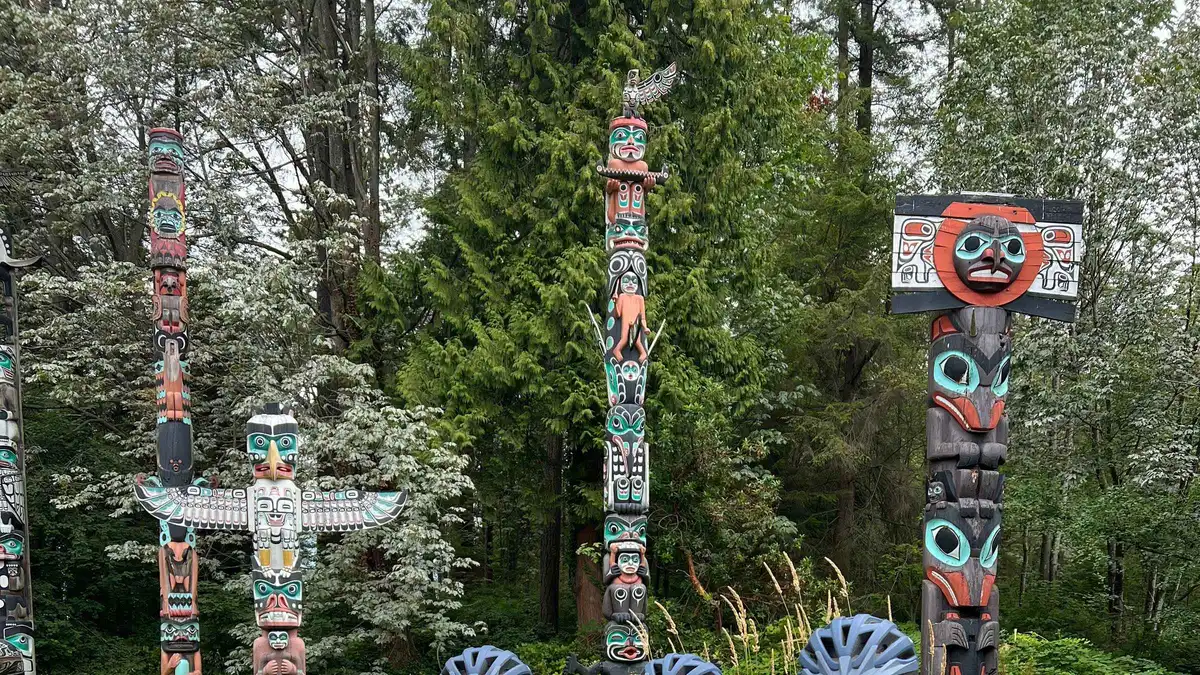
The Ultimate Stanley Park E-Bike Tour
A five-rider e-bike tour that rides the whole seawall loop plus the interior trails, stopping at the totem poles, Deadman's Island, Siwash Rock and Prospect Point. Pickup anywhere in Vancouver proper is included in the price.
Check Availability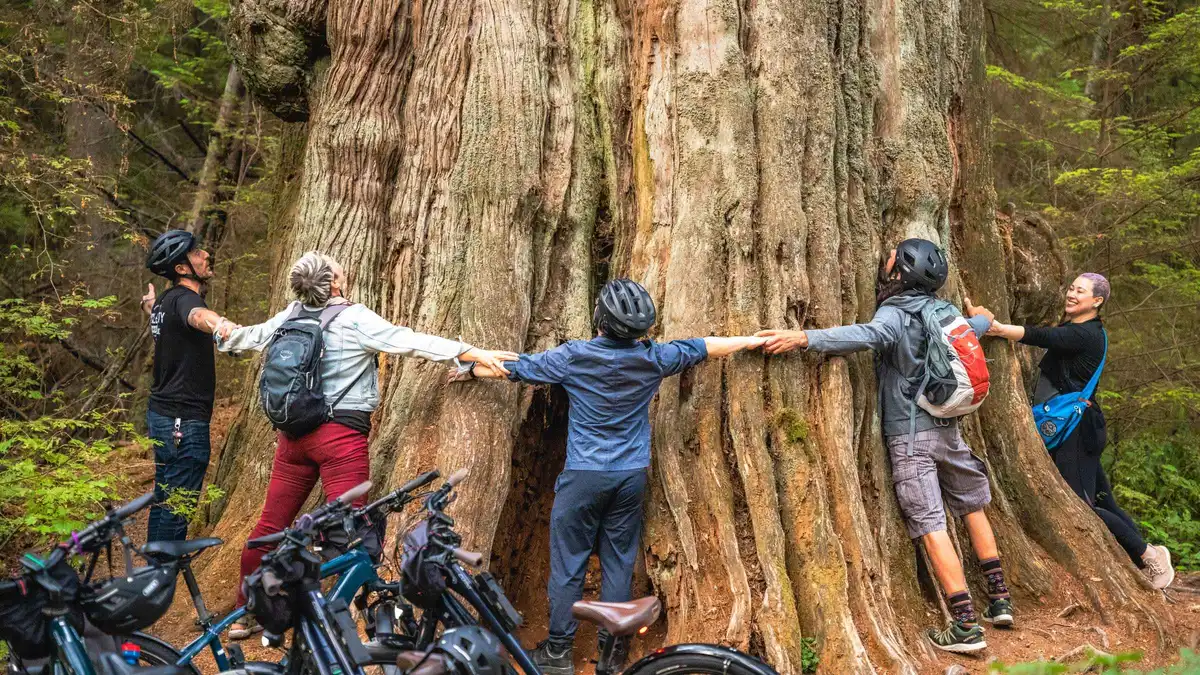 from $75.70
Top rated
from $75.70
Top rated
Vancouver: Stanley Park Bicycle Tour
Three hours and 12 flat kilometres through the West End, English Bay and Stanley Park with a guide who stops for the totem poles, Beaver Lake and the forest trails. Bike and helmet are included; e-bike upgrades are in-store only.
Check Availability from $69.99
Top rated
from $69.99
Top rated
Vancouver: Stanley Park Bike Tour | E-Bike Upgrade Avail.
Three hours from Canada Place through the old-growth stands, the totem poles and the skyline viewpoints, in a group capped at 12. A liability waiver is signed on arrival and the e-bike upgrade is arranged in advance, not on the day.
Check Availability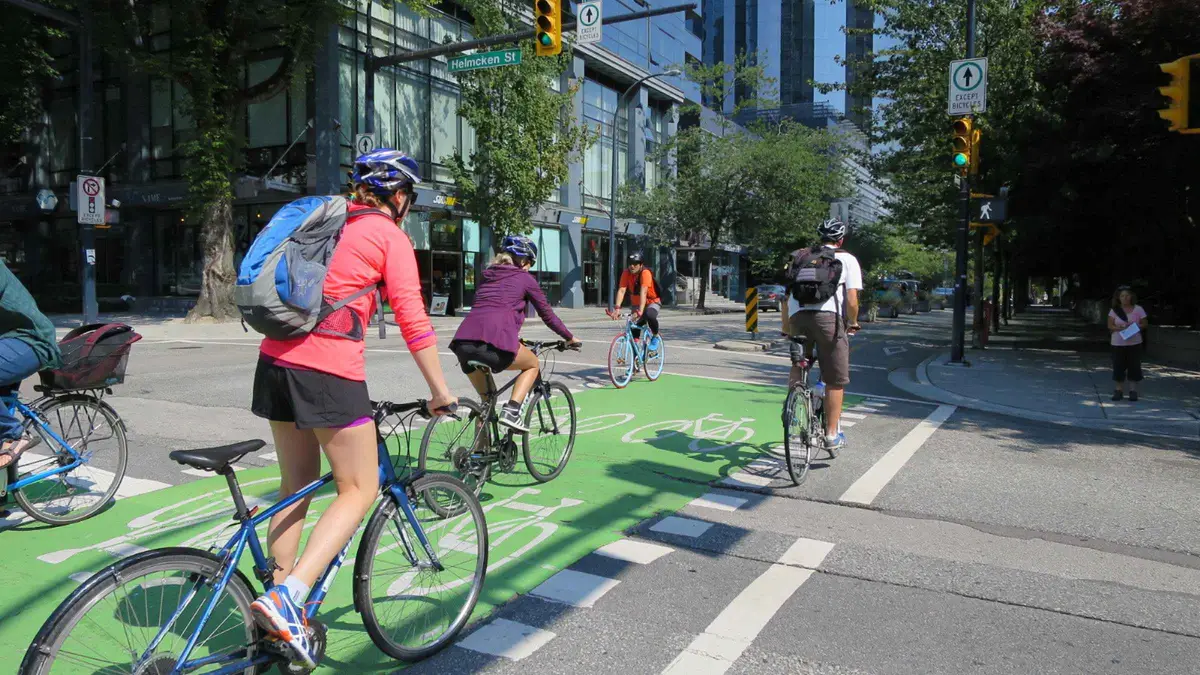 from $71.82
Top rated
from $71.82
Top rated
Vancouver: Stanley Park & Downtown Bike Tour
The longest of the city bike routes at 18 km, covering Davie Village, Robson Square, the seawall, Totem Park and Siwash Rock in about three and a half hours. Bike, helmet, water bottle and hotel pickup are included.
Check Availability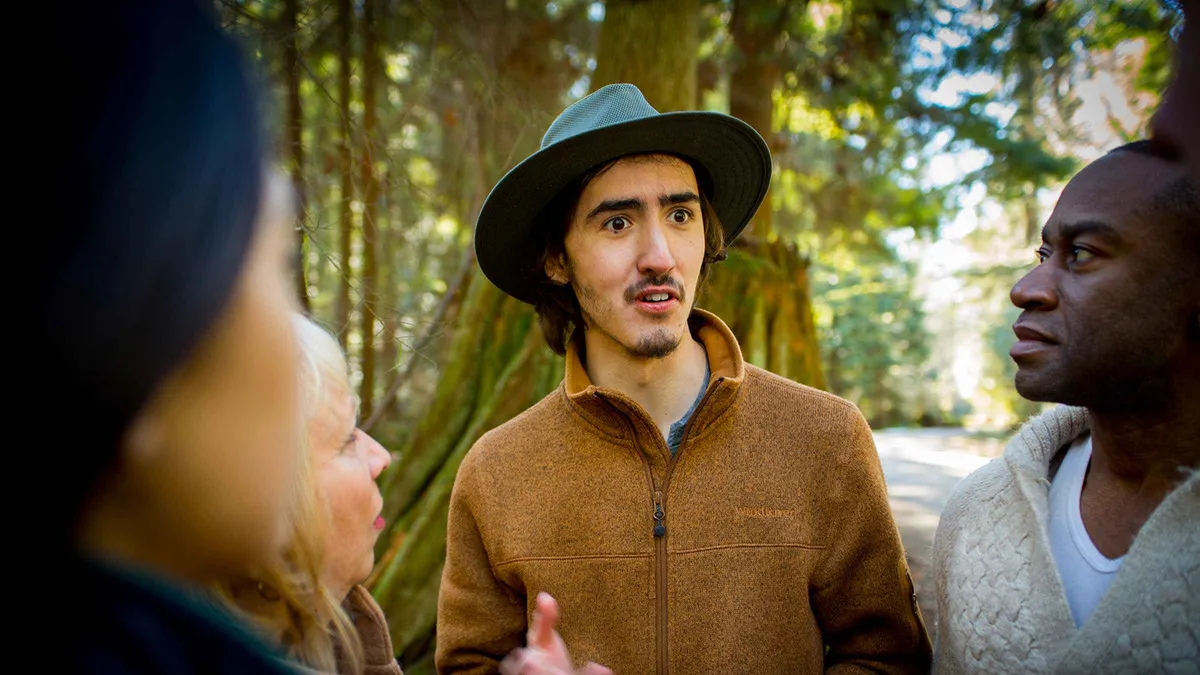 from $28.29
Vancouver: The Dark Secrets of Stanley Park Tour
Two hours off the main paths with a storyteller, covering the forced evictions of Coast Salish families, the smallpox history of Deadman's Island and the park's hidden cemeteries. Adult subject matter, ending back at the aquarium.
Check Availability from $58.04
Vancouver: Stanley Park Talking Trees Tour
Ninety minutes and 2.2 km around Beaver Lake with an Indigenous guide explaining how Coast Salish people use the park's trees and plants for food and medicine. Herbal tea is included, and berries in season.
Check Availability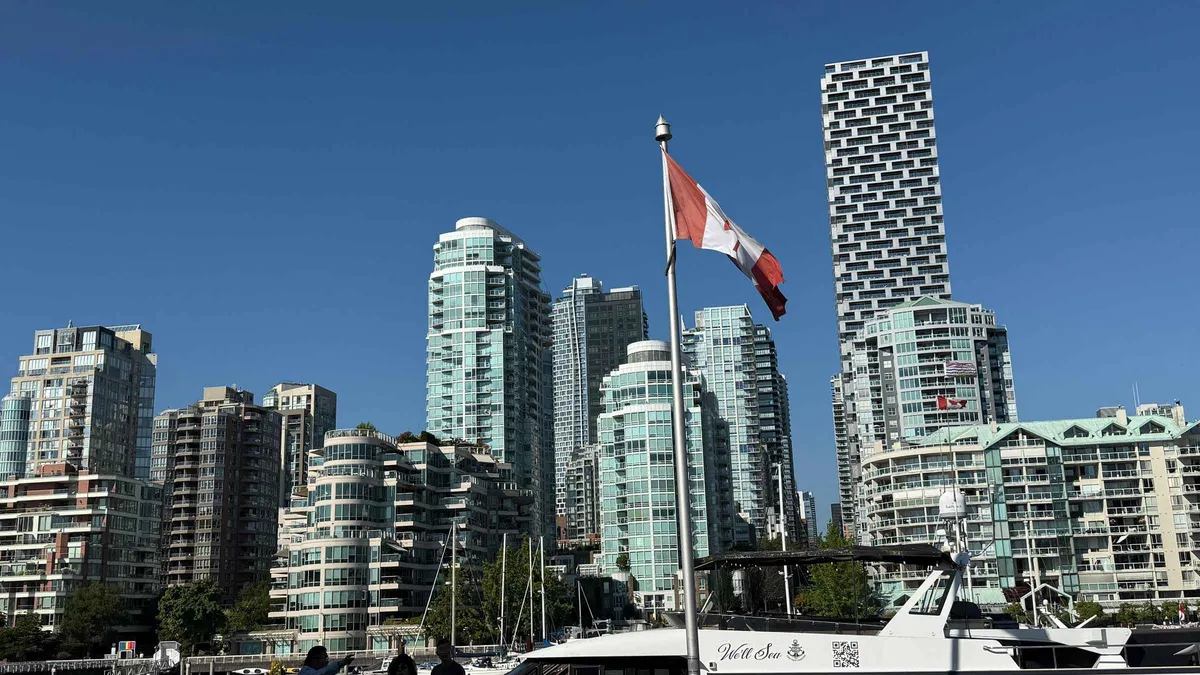 from $50.12
Top rated
from $50.12
Top rated
Vancouver: Hop-On Hop-Off City Tour, SMALL GROUP "12 STOPS"
A hop-on hop-off route run in 15-seat vans rather than buses, with 24, 48 and 72 hour passes and 12 to 17 stops depending on the pass. The driver is not a guide and no attraction tickets are included.
Check AvailabilityPrices, ratings and details are the platform's own. Dollar figures are the listed prices. The platform bills in your account's currency.
What Is Free Here, And What Is Not
The single most searched question about this park has a one word answer, and then a list of exceptions that costs people money at the barrier arm rather than at a gate.
Entry is free. The City charges nothing to walk, run, cycle, picnic, swim or sit on any part of the 400 hectares, and that includes the seawall, the beaches, Lost Lagoon, Beaver Lake, the rose garden and the totem poles at Brockton Point. There is no ticket office, so there is nothing to book and nothing to skip the line for.
What is not free is arriving by car. Pay parking is in force on every roadway and every lot inside the park, 6am to 11pm, seven days a week, all year, and it is enforced by plate rather than by a windscreen ticket. The rate changes with the season, and the day maximum is not sold at every machine: the operator lists eight meter stations, including both totem pole lots, Brockton Point, Prospect Point, the Teahouse and the Fish House, where you can only buy hours.
The three things inside the park you pay for
| What | Who charges | What it costs | Worth knowing |
|---|---|---|---|
| Parking, all lots and roadways | EasyPark for the Park Board | CA$4.75 an hour and CA$17.75 a day, April 1 to September 30; CA$4.25 and CA$12.75, October 1 to March 31 | Taxes included; day maximum not sold at eight of the meter stations; buses from CA$24.25 to CA$61.50 by seat count |
| The aquarium | A private operator inside the park | An admission ticket, priced on the aquarium page | The park around it stays free, which surprises people who expect one ticket to cover both |
| The horse drawn carriage | Stanley Park Horse-Drawn Tours | CA$88 adult ($63.70) in peak season, CA$40 for a child aged 3 to 12 ($29.00) | One hour, departs 735 Stanley Park Drive, no reservation for scheduled tours, all taxes included |
The train is a fourth thing people budget for and cannot buy. The Park Board states that train operations remain suspended because of safety concerns with the ageing systems, and that staff are exploring new operating models; no 2026 season and no prices are published. If a blog quotes you a child fare for the Stanley Park Train, it is quoting a year that has passed.
Parking figures and the parking seasons come from the City's Stanley Park parking page and the operator's own lot listing, read for this guide in Q3 2026; the carriage rates come from the operator's schedule and rates page, read the same day.
The Park In Nine Dates
The park reads as wilderness and is not: it is a logged military reserve that was leased, cleared of its residents, walled, blown down and replanted. These are the dates that explain what you walk past.
-
1860s to 1880s
The peninsula is logged
Six companies selectively logged the future park before it was a park. Most of the forest trails you use today began as skid roads for hauling out timber, which is why they run so straight.
-
1886
The new city asks for the military reserve
Vancouver's first city council petitions for the peninsula, then a federal military reserve, to be leased as a park. The lease was renewed in 1908 for 99 years and is described by Parks Canada as perpetually renewable.
-
27 September 1888
The park opens
It opens as Stanley Park, named for Lord Stanley, then Canada's governor general.
-
September 1889
Lord Stanley dedicates it
He dedicates the park, in the wording still quoted on its plaques, to the use and enjoyment of peoples of all colours, creeds, and customs, for all time. The wording did not protect the people already living here.
-
1889 onward
The villages are cleared
Two settlements stood inside the park: Xwayxway near what is now Lumberman's Arch, and Chaythoos east of Prospect Point. Removals begin in 1889; the last resident, Sexwalia Kulkalem, stayed until her death in 1923, after which the property was bought out. The story is the subject of the two hour history walk.
-
1913 to 1916
Lost Lagoon is cut off
The shallow tidal end of Coal Harbour is closed off by the Georgia Street causeway and becomes the freshwater lagoon you circle on the way in.
-
1917 to 1971
The seawall is built, one stone at a time
Work begins in 1917 to stop the foreshore eroding under ship wash from the First Narrows. Master stonemason James Cunningham worked on it from 1931 until his retirement in 1963 and died that September; the final block of the park section was placed on 26 September 1971. The Park Board's plaque to him stands at Siwash Rock.
-
Mid 1960s
The totem poles move to Brockton Point
The collection began at Lumberman's Arch in the 1920s, when the Park Board bought four poles from Alert Bay on Vancouver Island, and was later moved to what the City calls the attractive and accessible Brockton Point.
-
15 December 2006
The windstorm
Winds of about 115 km/h bring down roughly 10,000 trees and damage a large share of the forest. The roughly 9 million dollar restoration that followed is why so many stands along Park Drive are visibly even aged and young.
-
2023 to 2025
The bike lane comes and goes
The temporary Park Drive bike lane installed in 2021 was largely removed from May 2023 by Park Board direction. In September 2025 the Board asked staff to report back on a permanent separated lane, with costs projected into the 2027 to 2030 capital plan. Nothing permanent is built, so cyclists share the seawall.
Dates from the City of Vancouver's own park, seawall, parking and totem pole pages and its news releases, read for this guide in Q3 2026, with the logging, storm and dedication details as recorded in the Wikipedia article on the park and its cited sources.
Things To See In Stanley Park, In The Order The Loop Takes Them
Taken clockwise from the West Georgia Street entrance, which is how the traffic runs and how most guided rides go, the landmarks arrive in this order. Distances are ours, measured along the City's 9 km seawall figure.
Coal Harbour to Brockton Point, the first 2 km
You start with the working side of the park: float planes lifting off the harbour, the rowing club, and the Nine O'Clock Gun on the point, a naval cannon that is fired electrically every night at 21:00. Hallelujah Point and Deadman's Island sit on this stretch, the island now a naval reserve base and, before that, a smallpox quarantine site and burial place. The history walk starts near here and spends most of its two hours on this end.
The totem poles and the welcome portals
Nine totem poles stand at Brockton Point, and the City calls them BC's most visited tourist attraction. They are also the park's most misunderstood object, and the misunderstanding is worth clearing up before you photograph them: see the section below on where they came from.
Beside them stand three red cedar portals carved by the Coast Salish artist Susan Point and installed in 2008, made with the Musqueam, Squamish and Tsleil-Waututh Nations. Those are the Coast Salish work on the site; the poles are not.
Lions Gate Bridge to Prospect Point, the halfway mark
The seawall passes directly under the Lions Gate Bridge, which is the photograph most people come for and the point at which walkers realise how far around they still are. Prospect Point above it is the highest point in the park, reachable from the seawall only by a climb, so most walkers stay low and most drivers stop there instead.
Siwash Rock, Third Beach, Second Beach
Siwash Rock is the sea stack standing off the wall on the west side, with a small fir on top; the Squamish name is Slhx̱i7lsh. Cunningham's plaque is here. Past it the wall reaches Third Beach at Ferguson Point, which the City describes as a naturally sandy beach shielded from urban noise and the place for sunsets, and then Second Beach, where the outdoor pool sits behind the sand.
Second Beach Pool closed for the 2026 season on 7 September, and the City does not publish its 2026 opening date. The city's other outdoor saltwater pool, at Kitsilano Beach, ran to 13 September 2026.
Inland: Lost Lagoon, Beaver Lake, the gardens
The inner park is where the crowd thins. Lost Lagoon has a fountain and a heron colony nearby; Beaver Lake is the wetland the Indigenous led plant walk works around; the rose garden sits near the Georgia Street entrance and is free at all hours. The forest trails between them were logging roads, and on a wet day they are the better half of the park.
How Much Time To Give Stanley Park
The City publishes one figure and it is only about the seawall: 2 to 3 hours to walk the 9 km portion, 1 hour to cycle it. That is a route time, not a visit time, so here are three routings with what each one gives up.
The variable is not the distance, it is whether you commit to the full circuit. The seawall does not shortcut: once you are past Brockton Point the only ways back are the loop itself, the interior trails or a long walk up to Park Drive. Decide before you start, because the point of no return is about 40 minutes in.
| Routing | What you get | What it skips | Door to door |
|---|---|---|---|
| The short visit, on foot | Coal Harbour, the Nine O'Clock Gun, the totem poles and the welcome portals, then back the way you came or inland past Lost Lagoon | The bridge, Siwash Rock and all three beaches, which is the scenic half | About 1 hour 30 minutes from the West Georgia Street entrance |
| The full seawall loop | The whole 9 km circuit in the City's stated 2 to 3 hours, every landmark in this section, and a beach at the far end | Nothing on the water; the interior trails, Beaver Lake and the gardens stay unseen | Half a day once you add a beach stop and lunch |
| By bike, guided | The e-bike tour rides the entire seawall and the inner trails in 3 hours with pickup from anywhere in the city, and the bicycle tour covers about 12 km of park and city at a slower pace | Time standing still. Guided rides stop for photographs, not for a swim or a long lunch | 3 hours, plus the ride to and from your hotel on the e-bike option |
| With small children | Lost Lagoon, the totem poles, Second Beach and its playground, arriving by car or the number 19 bus | The far side of the loop entirely, and the train, which is out of service | 2 hours, and see Vancouver with kids for the rest of the day |
The Totem Poles At Brockton Point: Whose Poles They Are
The nine poles are the most photographed objects in British Columbia and are routinely captioned as local Coast Salish work. They are not, and the City's own account says where they came from.
The collection started at Lumberman's Arch in the 1920s, when the Park Board bought four totems from Alert Bay on Vancouver Island, which is Kwakwaka'wakw territory. More were added from Haida Gwaii and from Rivers Inlet on the central coast, to mark the city's 1936 Golden Jubilee. In the mid 1960s the poles were moved to Brockton Point. The newest pole on the site was carved in 2009 by Robert Yelton of the Squamish Nation, whose mother was born in the village that stood here.
Totem poles are a northern coast tradition. The land itself is the unceded territory of the xʷməθkʷəy̓əm (Musqueam), Sḵwx̱wú7mesh (Squamish) and səlilwətaɬ (Tsleil-Waututh) Nations, and the Coast Salish presence on the site is the three red cedar portals by Susan Point, made over three years with those three Nations and installed in 2008. Walk through them rather than past them; that is what they are for.
The purchase dates, the origins and the portal details are all published on the City's First Nations art page for the park, read in Q3 2026. Some of the poles on display are replicas, with originals moved into museum care, and the City does not publish a pole by pole list of which are which.
Getting There, Parking, And The Bus Nobody Mentions
This is where the plan usually breaks. The park has no transit loop, no functioning train and no free shuttle, and the City says so in one sentence on its own directions page.
The City's wording is blunt: there is no public transit service around the park. TransLink's number 19 gets you to the edge, stopping on Stanley Park Drive near Lost Lagoon and at Stanley Park Loop, which is a short walk from the aquarium and the totem poles, and that is the extent of it. The trolley marketed as a shuttle is a privately operated paid tour, not a City service, and there is no free shuttle in 2026.
On foot from the West End it is roughly 20 minutes to the Georgia Street entrance from Robson Street, and less from English Bay to the Beach Avenue entrance. By bike from downtown it is 10 to 15 minutes on separated lanes; rental shops sit on Denman Street and around Coal Harbour, and the guided rides include the bike. If you drive, budget for the day maximum rather than hours: the loop takes longer than people expect, and eight of the meter stations do not sell a day ticket at all, so buy at a station that does or pay by app.
Accessibility: the City publishes an interactive accessibility map of trails, amenities and features rather than a single statement about the park, and accessible parking for the aquarium sits in the City lot on the north side of that building. The seawall itself is paved and flat for its whole length, which makes it one of the better wheeled routes in the city; details and the rest of the city's picture sit on the accessibility page.
Five Things Most Visitors Do Not Know About Stanley Park
All five come off official pages, and each one changes a decision you would otherwise make wrong.
- The counter clockwise cycling rule is not a published City rule. Every rental shop and every guide will tell you the bike lane runs one way anticlockwise, and on the ground it does; but the City publishes only two things, that the path is split between walkers nearest the water and cyclists on the inside path, and a 15 km/h limit on shared paths. Nothing on vancouver.ca states a direction [vancouver.ca seawall pages, read in Q3 2026]. - The seawall shuts for about three weeks every winter. The Park Board closes the section between Prospect Point and Third Beach, and Ferguson Point for a few days, to scale loose rock off the cliffs above the path. The dates for the coming winter are not published in advance [vancouver.ca Stanley Park seawall page]. - Pay parking runs to 11pm, an hour after the park's own closing time. The park is posted as open 6am to 10pm; parking enforcement runs 6am to 11pm, every day, all year, including the winter months when most visitors assume it lapses [vancouver.ca parking page and the operator's lot listing]. - There is no train and no free shuttle in 2026. Train operations remain suspended because of safety concerns with its ageing systems, and the City states plainly that there is no public transit service around the park [vancouver.ca miniature train and directions pages]. - The forest is not old growth all the way through. Six companies logged the peninsula between the 1860s and 1880s, and about 10,000 trees came down in the windstorm of 15 December 2006, so a good share of what you walk under is second growth or younger [Wikipedia's park article and its cited sources, cross checked against the Park Board's restoration record].
In Stanley Park: What To Do, And What Not To
Each line is a decision argued somewhere above, in the form you can act on before you leave the hotel.
Do
- Walk or cycle in from the West End or English Bay rather than driving, and skip the parking question entirely
- Start clockwise from the Georgia Street entrance so the totem poles come early and the beaches come at the end
- Buy the day maximum if you do drive, and check that your meter station sells one before you pay for hours
- Take a guided ride if you want the whole loop and the inner trails inside three hours
- Keep to the inside path on a bike and the water side on foot; the split lanes are the one rule the City does publish
- Walk through the three cedar portals at Brockton Point, not around them
Don't
- Don't budget for the Stanley Park Train: it is suspended, with no season and no prices published
- Don't wait for a free shuttle or a park bus loop; there is none, and the trolley is a paid private tour
- Don't assume one ticket covers the aquarium and the park; the park is free and the aquarium sells its own
- Don't plan a winter walk of the far side without checking for the rock scaling closure between Prospect Point and Third Beach
- Don't call the totem poles Coast Salish work; the poles came from Alert Bay, Haida Gwaii and Rivers Inlet, and the Coast Salish carvings here are Susan Point's portals
Stanley Park Map: The Loop, The Landmarks And The Entrances
The two road entrances, the landmarks in loop order and the two beaches with facilities. Coordinates are the published Wikidata positions for each feature or, where none exists, a position read off the City's own address for it.
Positions from the Wikidata items cited in this site's facts pack and from the City's published addresses, checked in Q3 2026. Tiles OpenStreetMap.
Next Stop From The Park
Walking times are ours, measured from the seawall exits rather than from the middle of the park.
English Bay Beach
The seawall runs straight out of the park onto the sand. Free, with the Inukshuk at the foot of Bidwell Street and the best sunset line in the city; the English Bay page covers the swimming season and the freighters.
5 min walk from the Beach Avenue entranceThe rest of the seawall
The park loop is 9 km of a 28 km waterfront path that runs from the Convention Centre to Spanish Banks. The seawall route page has the sections, the distances and where the bike lanes separate.
Continuous from both ends of the parkKitsilano Beach
The other side of the bay, with Vancouver's only saltwater pool. The Kitsilano page has the pool season, the sessions and the admission.
About 60 minutes on foot around False Creek, or a short rideStanley Park Questions
Is entrance to Stanley Park free?
Yes. There is no gate, no admission and no ticket for the park, the seawall or the totem poles, and the City publishes no entry price because none exists. What is charged is parking, which runs 6am to 11pm every day of the year at CA$4.75 an hour in high season, and the two paid attractions inside: the aquarium, priced on the aquarium page, and the carriage ride. If you want a guide rather than access, the guided rides and walks are what you are paying for.
What is so special about Stanley Park?
It is a 400 hectare forested peninsula with a 9 km paved seawall around its whole edge, one bus stop from a downtown core, and it costs nothing to enter. The combination is rare: the loop passes a working harbour, a naval island, nine totem poles, the underside of the Lions Gate Bridge, a sea stack and three beaches without leaving the pavement. The e-bike tour covers all of it in three hours if you would rather not walk it.
How long does it take to walk around Stanley Park?
The City states 2 to 3 hours to walk the 9 km seawall portion, or about 1 hour to cycle it. Add a beach stop or lunch at the far end and it becomes a half day. Our three routings, including a 90 minute short version that turns back at the totem poles, are in the how much time section above; the full seawall route is a different and much longer walk.
Is the Stanley Park train running in 2026?
No. The Park Board states that train operations remain suspended because of safety concerns with its ageing systems and that staff are exploring new operating models, and no 2026 season or prices are published. The other thing people expect and will not find is a park bus loop: the City states there is no public transit service around the park, so plan to walk, cycle, drive or take the number 19 to the edge (how to move around the city).
Are the totem poles at Brockton Point Coast Salish?
No, and this is the park's most repeated error. The Park Board bought the first four poles from Alert Bay on Vancouver Island in the 1920s, then added poles from Haida Gwaii and Rivers Inlet for the 1936 Golden Jubilee, and moved the collection to Brockton Point in the mid 1960s. The Coast Salish work on the site is Susan Point's three red cedar welcome portals, installed in 2008 with the Musqueam, Squamish and Tsleil-Waututh Nations. The history walk covers the villages that stood here before the park did.
Can you swim in Stanley Park?
Yes, at Second Beach and Third Beach, both free and both lifeguarded from Victoria Day to Labour Day, noon to 8pm, with hours shortening in August. The heated outdoor pool behind Second Beach closed for the 2026 season on 7 September and the City has not published its 2026 opening date. Vancouver's only saltwater pool is across the water at Kitsilano Beach, and the sheltered swimming most visitors end up doing is at English Bay.
What is there to see in Stanley Park on a rainy day?
The interior. The forest trails between Lost Lagoon and Beaver Lake were logging roads, they are sheltered by canopy, and they are empty when the seawall is not. The Indigenous led plant walk at Beaver Lake runs in weather, the aquarium is indoors and ticketed, and if the rain sets in for the day the rainy day list has the indoor alternatives.
Where The Park Fits In A Vancouver Day
Put it first. The park is at its best before 09:00, it costs nothing, and it sets the geography of the rest of the city in your head: the North Shore mountains on one side, the bridge, the harbour, the West End behind you. Walk or ride the loop, come out at English Bay for lunch on Denman Street, and you have half a day accounted for without a single ticket.
If you have one day in the city, this and Granville Island are the pair that fit together, connected by the seawall and a small ferry across False Creek. If you have three, the park is the morning of the first, before the day trips take the rest. Everything else worth pricing before you come is on what to do in Vancouver.
Stanley Park On Film: The Loop, The Landmarks And The Crowds
Three walk-throughs that show what the loop actually looks like, how busy the seawall gets and where the landmarks fall in sequence. Watch one and the map above stops being abstract.
Stanley Park Walking Tour: Full Seawall Loop, Vancouver BC
The whole seawall circuit at walking pace, which is the clearest way to judge the 2 to 3 hour figure for yourself.
Video: Prowalk Tours10 Things to Do in Stanley Park, Vancouver BC
The landmarks picked out one by one, useful if you are deciding what to cut from a short visit.
Video: Through My LensWalking Vancouver's Stanley Park in 4K
A recent walk through the park rather than around it, showing the interior trails and the gardens most visitors skip.
Video: Walks With CarlaVideos load from YouTube only when you press play.
Prices, hours and terms are set by the venue or operator and confirmed at checkout.
We may earn a commission if you book through one of our links, at no extra cost to you. Full affiliate disclosure