 Vancouver Trip Guide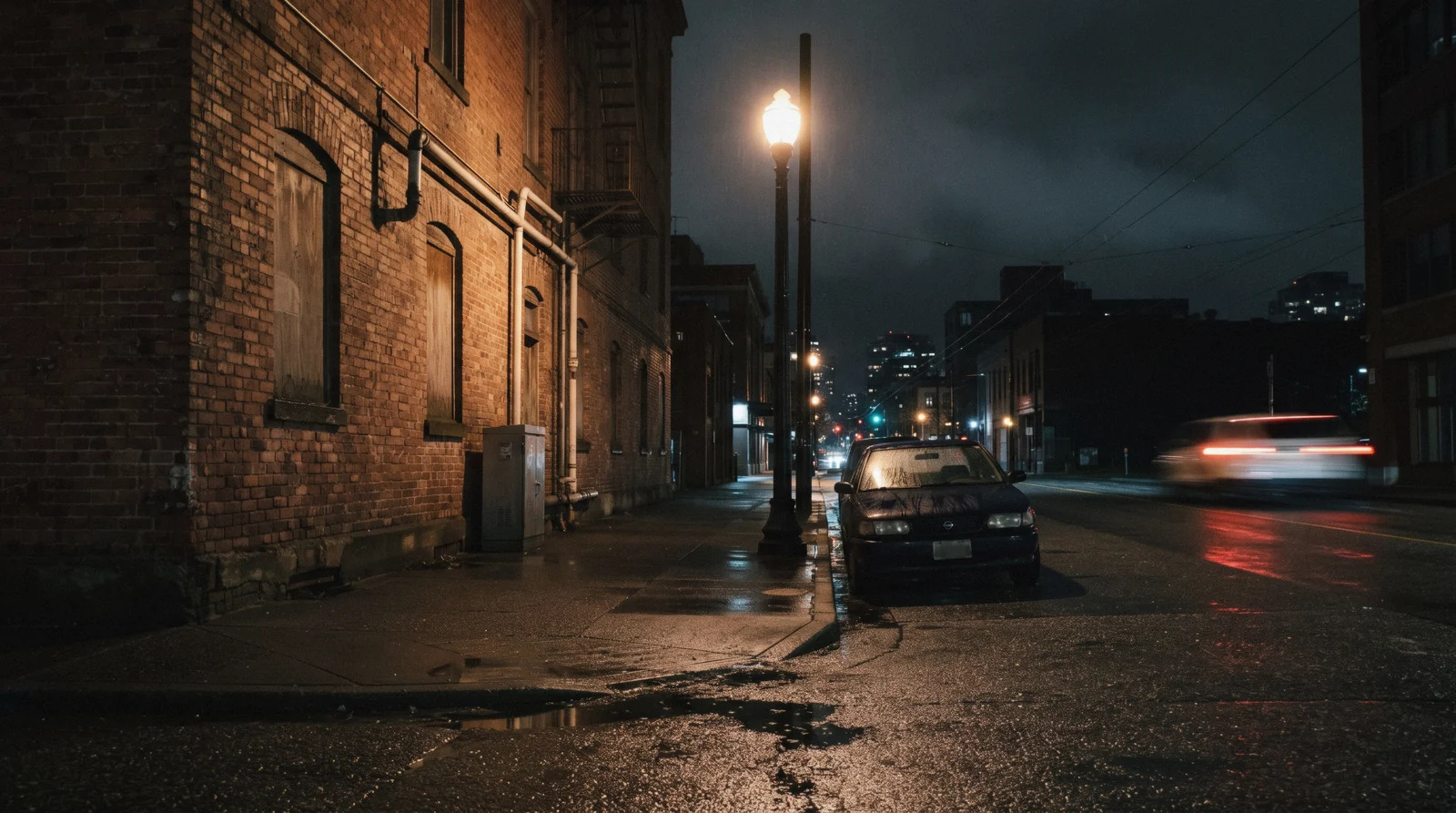
Vancouver Safety and Scams
Vancouver safety is a subject where the honest answer and the internet answer are different sizes. The police publish full-year statistics, the City publishes its own description of the neighbourhood everybody asks about, and both are calmer reading than the videos. This page uses those two sources and nothing else: the Vancouver Police Department's 2021 to 2025 crime tables, its neighbourhood breakdown for 2025, and the City's own pages, all read in Q3 2026. It covers the Downtown Eastside and where it actually is, what gets stolen and from where, the one scam the City warns about by name, and the wildlife advisories for the park and the mountains. Where a figure is not published, this page says who does not publish it. The neighbourhood that borders the area in question has its own guide at Gastown.
Quick answer The crime trend, the one street, the cars, and the wildlife
Vancouver is a safe city for visitors, and the direction of travel is downward: the police recorded 42,469 Criminal Code offences in 2025 against 43,074 in 2024, with violent crime down 12.0% and robbery down 24.4% per 1,000 residents. The risk that actually touches tourists is property crime, and specifically theft from vehicles, which is heavily concentrated in the Central Business District. One area, the Downtown Eastside centred on East Hastings Street, looks and feels different from the rest of the city and is the source of almost everything written about Vancouver safety online.
Key takeaways
- Theft from cars fell for a third straight year, from 7,185 in 2023 to 5,390 in 2025, and a third of what remains is in the downtown core
- The Downtown Eastside runs east from roughly Carrall Street along Hastings; Gastown's eastern edge is where visitors meet it, usually without meaning to
- The one fraud the City itself warns about is a QR-code sticker on a parking meter: the City does not use QR codes on meters at all
- Coyotes live in Stanley Park and are most assertive from January to June; feeding any wildlife in a Vancouver park is an offence
- Prefer to walk the older streets with somebody who knows them? A guided history walk or a Gastown food tour covers the same blocks with company
What The Police Numbers Actually Say
Full-year city-wide figures from the Vancouver Police Department's Crime Incident and Crime Rate Statistics 2021 to 2025, read in Q3 2026. The percentage column is the change in the rate per 1,000 residents, which is how the VPD publishes it; the population base for 2025 is 753,100.
| Offence | 2025 | 2024 | Change per 1,000 | What it means for a visitor |
|---|---|---|---|---|
| All Criminal Code offences | 42,469 | 43,074 | down 3.9% | The overall direction is down, for the city as a whole |
| Violent crime | 5,343 | 5,919 | down 12.0% | The largest single improvement in the table |
| Robbery | 493 | 636 | down 24.4% | Under 500 in a city of three quarters of a million |
| Theft from auto | 5,390 | 5,793 | down 9.3% | Still the offence most likely to touch a tourist, if you rent a car |
| Offensive weapons | 1,220 | 839 | up 41.7% | The clearest rise in the table, and not a street-robbery category |
Two categories rose sharply in 2025: offensive weapons, up 41.7%, and possession of stolen property, up 40.9%. Homicide stood at 26, and the report's own footnote states that the eleven victims of the 2025 Lapu-Lapu incident are counted under homicide. Break and enter fell 7.0%, theft of motor vehicle 14.2%, mischief 5.9% and arson 19.4%.
The Downtown Eastside: Where It Is, In The City's Own Words
This is the part of the page that most guides either sensationalise or skip. We are going to do neither, and the reason is that the City of Vancouver publishes a description of the area itself.
The City's wording is this: the Downtown Eastside is one of Vancouver's oldest neighbourhoods, and the historic heart of the city. The DTES has many assets, especially for its low-income residents, who appreciate feeling accepted and at home, and benefit from living near health and social services. Many volunteers contribute countless hours to help improve the community and work for social justice. In recent years, the Downtown Eastside has struggled with many complex challenges including drug use, crime, homelessness, housing issues, unemployment, and loss of businesses in the community.
Geographically, the City names eight sub-areas inside the DTES boundary: Chinatown, the Downtown Eastside Oppenheimer District, Gastown, the Hastings Corridor, the Industrial Lands, Strathcona, Thornton Park and Victory Square. That list is the single most useful thing on this page, because it tells you that Gastown and Chinatown, two places every visitor goes, sit inside the same municipal boundary as the area they have been told to avoid. The blocks people mean when they say Downtown Eastside are the stretch of East Hastings Street running east from around Carrall Street towards Main Street and beyond.
What the City does not publish is a block-by-block characterisation of that stretch. We checked its Downtown Eastside page, its local area plan page and the plan's own documents, and no City source describes East Hastings between Main and Carrall in the terms visitors use. What it does say about the same ground is historical: the original civic centre was centred around Main and Hastings, with City Hall, the City Market, the Carnegie Public Library and numerous theatres. The Carnegie building still stands on that corner as a community centre. Parts of the DTES and Strathcona are known as Ḵ'emḵ'emel̓áy̓, meaning maple trees in the Squamish language, and were an Indigenous summer settlement site for many generations.
The practical guidance, then, is geographic rather than moral. Walking east on Hastings from Gastown takes you into visible poverty, open drug use and a great deal of street disorder within two or three blocks. Nothing about that is aimed at you, and the police statistics for the containing neighbourhood are about people who live there rather than people passing through: Strathcona recorded 622 assaults and 64 robberies across the whole of 2025. If it makes you uncomfortable, walk a block north to Cordova or a block south to Pender and you are around it. That is the entire manoeuvre. Once you have moved a block off Hastings, one of the guided tours in Vancouver is an easy way to keep exploring the city on calmer ground, and you can compare the best tours in Vancouver before you go.
The reason the area looks the way it does is a public-health emergency rather than a policing one. British Columbia's Provincial Health Officer declared a public health emergency over unregulated drug toxicity in April 2016; it has not been rescinded. The BC Coroners Service recorded 2,253 deaths in 2024 and at least 16,047 since the declaration, and identifies Vancouver-Centre North as the Local Health Area with the highest rate in the province, at 422 deaths per 100,000 people.
That number is the neighbourhood, not the city.
Theft From Cars, And The Sign You Will See Everywhere
If you rent a car in Vancouver, this is the only crime statistic on the page that should change your behaviour. The neighbourhood table below is from the VPD's own 2025 breakdown.
Theft from auto is falling and remains the city's characteristic property crime: 7,185 files in 2023, 5,793 in 2024 and 5,390 in 2025. Where those files land is the useful part, because it is not evenly spread.
| Neighbourhood | Theft from auto, 2025 | General theft under and over CA$5,000 | Reading |
|---|---|---|---|
| Central Business District | 1,855 | 4,458 | A third of the city's car break-ins in the blocks most visitors park in |
| West End | 443 | 1,120 | The dense residential wedge towards Stanley Park |
| Strathcona | 369 | 603 | The neighbourhood containing most of the Downtown Eastside |
| Kitsilano | 202 | 465 | The beach side, where cars sit all day at a trailhead or a beach lot |
| Stanley Park | 54 | 53 | The whole park, for the whole year |
| City total | 5,385 | 13,303 | The neighbourhood tables total slightly below the city-wide figure |
The rule that follows is the one printed on signs across every car park in the city: leave nothing visible in the vehicle. Not a bag, not a jacket over a bag, not a charging cable suggesting there is a device somewhere. The City and the police run a long-standing campaign on exactly this, and it has no published effectiveness figure attached to it: the VPD's statistics pages carry no number for the campaign at all, which we checked before writing this sentence.
The honest counterweight is that most visitors here do not need a car. Downtown, the beaches, the parks and the North Shore attractions are all reachable on transit, and getting around Vancouver sets out how. The car is worth renting for the day trips, and a day trip means the vehicle is parked at a trailhead rather than on a downtown street overnight.
Bike Theft: The Number Nobody Publishes
Vancouver is a cycling city with a bike-theft reputation, and the police statistics do not let you measure it. That is worth stating rather than filling in.
The VPD does not break bicycle theft out as its own category. It falls inside general theft, which ran to 13,317 files city-wide in 2025, a category that also holds shoplifting, package theft and every other taking of property. We checked the VPD's statistics index, the 2021 to 2025 crime rate report and the 2025 neighbourhood report; none of them isolates bicycles. Any figure you read for Vancouver bike thefts per year comes from a registry, an insurer or an estimate, not from the police tables.
What that means practically is unchanged by the missing number. A rented bike locked to a rack on the seawall for an afternoon is a routine risk in any North American city, and the rental operators supply locks for a reason. If you are riding, the guided tours keep the bikes with the group: the Stanley Park bicycle tour is three hours with the bikes never left standing.
One further gap in the same direction. The City and the police run the no-valuables-in-vehicle campaign on signage across every downtown car park, and neither publishes a figure for how many break-ins it has prevented or how many of the 5,390 files in 2025 involved a visible item. We checked the VPD's statistics index before writing that sentence.
The advice is still the right advice; it simply arrives without evidence attached, and a page that pretends otherwise is inventing one.
The Only Scam The City Itself Warns About
Vancouver is not a pickpocket capital and has no famous street hustle. It has one documented fraud aimed squarely at visitors, and the City publishes a warning about it.
The scam is a QR-code sticker stuck to a parking meter, leading to a payment page that is not the City's. The City's own guidance is blunt: it does not use QR codes on its meters at all, so any QR code you see on one is fraudulent. Pay through the PayByPhone app or, since April 2026, HotSpot, both of which the City states carry no added fee, or at the meter itself.
The rest of the parking rules are worth having because they change more often than the fraud does. Meters run from 9 a.m. to 10 p.m., seven days a week, including statutory holidays. Since 27 April 2026 they no longer accept coins at all, which catches out anyone who has been here before. The City has also begun ending pay parking at 6 p.m. in low-occupancy areas during 2026, so the hours on the pole matter more than the general rule.
Beyond that, there is nothing distinctive to warn about. The usual urban precautions apply, and the categories that would signal a tourist-targeting problem, robbery and assault, both fell in 2025. Nothing in the police tables or the City's pages describes an organised scam aimed at visitors other than the meter stickers.
Two further habits are worth carrying because they are specific to this city rather than generic. Buses and trains here run on a tap-in system with no conductor, and the fare gates at rail stations close on people who have not tapped, so keep the card or phone you tapped with to hand rather than buried. And on the North Shore mountain roads, winter tyres are mandatory from 1 October to 31 March, which is a legal requirement rather than a recommendation and applies to a rented car exactly as it applies to a local one.
Drugs, And What Changed On 31 January 2026
A great deal of what has been written about Vancouver in the last three years is out of date on this specific point, and repeating it will get a visitor into genuine trouble.
British Columbia ran a pilot programme decriminalising personal possession of certain illicit drugs from 2023 under a federal exemption. In the province's own wording, the exemption expired on 31 January 2026 and will not be renewed. Personal possession of illicit drugs is therefore not decriminalised in British Columbia in 2026. Any guide, forum post or video written before that date and describing decriminalisation as current is wrong.
The separate public health emergency over unregulated drug toxicity, declared in April 2016, remains in force. Those two facts sit together and are frequently confused: the emergency is a health declaration, the exemption was a criminal-law arrangement, and only one of them has ended.
Coyotes In Stanley Park
The park has resident coyotes, the City publishes an advisory about them, and the widely repeated attack and cull figures do not appear on any official page. Here is what is actually documented.
The City states that coyotes are not native to Vancouver but have been thriving in the urban environment since the 1980s, that January to June is coyote breeding season, and that coyotes might be more active and assertive during this time, especially near their dens. Mating pairs begin denning in January and pups are born in spring. In urban areas coyotes are most often active at night to minimise interaction with humans, but it is normal to see them during the day. On the park specifically, the City records that at least one family of coyotes calls Stanley Park home and feeds primarily on small rodents such as the invasive eastern gray squirrels, though they have also been known to prey on Canada geese and raccoons.
The Park Board occasionally closes trails in high-traffic areas like Stanley Park where coyotes are known to frequent, to give them space during breeding and denning season. If a trail is taped off between January and June, that is usually why.
- Do not feed any wildlife in a Vancouver park. The City's news release puts the fine at CA$500, a figure we surfaced from that release but could not re-read on the rendered page, so treat the amount as indicative and the prohibition as absolute
- Report aggressive behaviour, a fed animal or any contact immediately to the provincial Report All Poachers and Polluters line, 1-877-952-7277
- Ordinary sightings are tracked by the Stanley Park Ecology Society, which monitors coyote behaviour and populations across the city
- Coyotes here weigh about 9 to 16 kg, with a grey-brown or yellow-grey coat, a black-tipped tail, yellow eyes and a white throat and belly
On the 2021 events: the Stanley Park Ecology Society records that incidents with coyotes continued to escalate through 2021 and that the province decided on a park-wide cull. No official page we could reach publishes a count of attacks or a number of animals killed, and the figures circulating online could not be confirmed against any government or Park Board source. We are not going to print them.
What is worth carrying into the park is the advisory, not the anecdote, and the park itself is covered on the Stanley Park page.
Bears On The North Shore
Every North Shore attraction on this site sits in black bear country, and the District of North Vancouver is formally recognised for how it handles that.
British Columbia has some of the highest black bear populations in the world, with estimates ranging from 120,000 to 150,000 animals, and most of the province is considered bear country. Bears are most active from April to November and are typically in dens from December to April when food is less available, though in milder climates or where they keep finding food they may not den at all, which describes the North Shore in a mild winter. In autumn they enter hyperphagia, requiring an average of 20,000 calories a day, which is when a bear becomes single-minded about food sources. Black bears account for 14,000 to 25,000 calls a year to the provincial Conservation Officer Service.
On 8 July 2024 the province designated the District of North Vancouver a Bear Smart Community, one of thirteen municipalities in British Columbia to hold the status. That is the jurisdiction covering Lynn Canyon, Deep Cove and the approaches to Grouse Mountain.
The province's own encounter guidance, quoted:
- Do not feed bears. It is against the law to feed dangerous wildlife
- Remain calm. Do not run or climb a tree. Slowly back away, talking to the bear in a quiet, monotone voice
- Keep away from the bear. Do not try to get closer to it
- If the bear gets too close, use pepper spray, effective within 7 metres, or something else to threaten or distract it
- Report an aggressive or threatening bear on 1-877-952-7277; report a sighting in North Vancouver on 604-990-BEAR (2327)
Rules That Catch Visitors Out
None of these is a safety risk. All of them are ways to acquire a fine or an argument on a first afternoon, and all are published by the City or the province.
Drinking alcohol in public is legal here in specific places and illegal everywhere else, which is a harder rule to follow than a blanket ban. The legal drinking age is 19. The Park Board runs a permanent programme allowing adults over 19 to bring and consume alcohol on seven named beaches from 15 May to 30 September between 11 a.m. and 9 p.m., in 31 parks year-round, in a further 16 parks from 1 July to 31 August, and in 13 designated plazas under the 2026 to 2029 programme. Glass is not permitted. Several of the places a visitor would guess are excluded, including English Bay, Sunset Beach, Third Beach and CRAB Park, so guessing is a bad strategy: check the sign at the entrance.
Cannabis is legal to buy at 19 and banned in every Vancouver park, every beach and on the seawall under the Park Board's smoking regulation bylaw. That covers essentially every outdoor space a visitor would want to use it in.
One seasonal hazard is worth planning around rather than fearing. Metro Vancouver states that wildfire smoke has impacted air quality in seven of the last ten years, and the recent record swings hard: five advisories over ten days in 2023, then a single warning over three days in 2024 with no wildfire smoke involved at all. A smoky August is a real possibility and a hazy horizon ruins the view from every lookout and gondola on this site, so it is worth checking the air quality index before booking a mountain day rather than after. The best time to visit page covers the seasonal pattern.
Everything else worth pricing before you come is on what to do in Vancouver.
Walking The Older Streets With Company
Four bookings that cover the historic blocks, the park and the harbour with a guide rather than a map, which is the honest answer for anyone nervous about the east end of downtown. Operator listings in US dollars, read in Q3 2026.
 from $5
Vancouver Uncovered: Downtown History & Culture Walk
Three hours on foot through downtown with a local guide covering architecture, street art and how the neighbourhoods fit together. Gratuities are not included and cash is listed among what to bring.
Check Availability from $120.36
Top rated
from $120.36
Top rated
Vancouver: Gastown Historical Walking Food Tour
Three hours and seven venues in Gastown with six tastings, two of them desserts, and four alcoholic drinks with non-alcoholic swaps available. Dietary requests need 24 hours notice, and three of the stops involve stairs.
Check Availability from $28.29
Vancouver: The Dark Secrets of Stanley Park Tour
Two hours off the main paths with a storyteller, covering the forced evictions of Coast Salish families, the smallpox history of Deadman's Island and the park's hidden cemeteries. Adult subject matter, ending back at the aquarium.
Check Availability from $75.70
Top rated
from $75.70
Top rated
Vancouver: Stanley Park Bicycle Tour
Three hours and 12 flat kilometres through the West End, English Bay and Stanley Park with a guide who stops for the totem poles, Beaver Lake and the forest trails. Bike and helmet are included; e-bike upgrades are in-store only.
Check Availability from $50.12
Top rated
from $50.12
Top rated
Vancouver: Hop-On Hop-Off City Tour, SMALL GROUP "12 STOPS"
A hop-on hop-off route run in 15-seat vans rather than buses, with 24, 48 and 72 hour passes and 12 to 17 stops depending on the pass. The driver is not a guide and no attraction tickets are included.
Check AvailabilityPrices, ratings and details are the platform's own. Dollar figures are the listed prices. The platform bills in your account's currency.
Vancouver Safety Map: The Geography Behind The Question
The corners that explain the question. Not a crime map: the police publish one of those. These are the landmarks that tell you which street you are on.
Positions from published addresses and street intersections, read in Q3 2026.
Where To Go Next
The pages that carry the neighbourhoods and the practicalities behind this one.
Gastown
The oldest blocks in the city, the steam clock, and an honest account of where the street changes character. Read the Gastown guide.
The neighbourhood on the boundaryGetting around Vancouver
Fares, zones, the SeaBus, and the honest verdict on driving in a city where a third of the break-ins are downtown. Read the transit page.
The reason not to rent a carVancouver accessibility
Lifts, ramps, the flat seawall and the attractions that publish their limits. Read the accessibility page.
The other practical layerPlan a trip to Vancouver
Seasons, itineraries, budget, transport and the rest of the pre-trip layer, indexed. Read the planning hub.
Everything before you goVancouver Safety Questions
Is Vancouver safe for tourists?
Yes, and the trend is improving. The police recorded 42,469 Criminal Code offences in 2025 against 43,074 the year before, with violent crime down 12.0% and robbery down 24.4% per 1,000 residents. The risk that actually reaches visitors is property crime, mostly theft from parked cars, and the numbers table has the rest.
Where is the Downtown Eastside and should I avoid it?
It runs east along Hastings Street from roughly Carrall Street, and the City's own boundary includes Gastown, Chinatown, Strathcona and Victory Square inside it. You do not need to avoid the area so much as know which block you are on: one street north or south of Hastings and the character changes completely. The section above quotes the City's own description, and the Gastown guide covers the border in practice.
Is downtown Vancouver safe at night?
For the ordinary downtown blocks, yes, with normal city precautions. The Central Business District records the city's highest counts for most property categories simply because it holds the most people, cars and shops: 1,855 theft-from-auto files in 2025 against 54 in Stanley Park. Nothing in the police tables describes a tourist-targeting pattern, and the scams section covers the one fraud the City warns about.
How common is car theft in Vancouver?
Theft of a whole vehicle is uncommon at 573 files in 2025, down 14.2%. Theft from a vehicle is the city's characteristic crime at 5,390 files, though it has fallen for three straight years from 7,185 in 2023. The neighbourhood table shows where those files land, and the transit page explains why most visitors do not need the car at all.
Are there scams targeting visitors in Vancouver?
One that the City documents: QR-code stickers stuck to parking meters, leading to a fake payment page. The City does not use QR codes on meters, so every one you see is fraudulent. Pay through the official app or at the meter, which has taken no coins since April 2026.
Are coyotes or bears a risk to visitors?
Coyotes live in Stanley Park and are most assertive from January to June during denning; the City advises keeping distance, never feeding them, and reporting aggressive behaviour on 1-877-952-7277. Black bears are active on the North Shore from April to November. The coyote section and the bear section carry the official guidance, and a guided park walk is the version with somebody who knows the trails.
Are drugs decriminalised in Vancouver?
No, not any more. The federal exemption that underpinned British Columbia's decriminalisation pilot expired on 31 January 2026 and will not be renewed, so personal possession is not decriminalised in 2026. The section above separates that from the public health emergency declared in 2016, which is still running.
The Safety Question On Film
Three that take the question seriously from different angles: two visitors' accounts and the national broadcaster asking residents directly.
How safe is Vancouver?
A visiting couple's account of the downtown blocks this page describes.
Video: Gavin And Paul See The WorldHow do Vancouverites feel about safety in the city's downtown?
The national broadcaster asking residents rather than tourists, filmed downtown.
Video: CBC British ColumbiaIs Vancouver SAFE? - Living in Vancouver
The resident perspective on the areas visitors ask about most.
Video: LIVING IN VANCOUVER BCVideos load from YouTube only when you press play.
Prices, hours and terms are set by the venue or operator and confirmed at checkout.
We may earn a commission if you book through one of our links, at no extra cost to you. Full affiliate disclosure